The back story.
Way back when, when writing books was part of my thing, I got commissioned to write a book about “The Big Lebowski” for a proposed series that would do deep dives into all of the references in various cult flicks. I accepted and lured in my former INdy Men’s Magazine cohort Tim Farrell for the project.
We wrote the book.
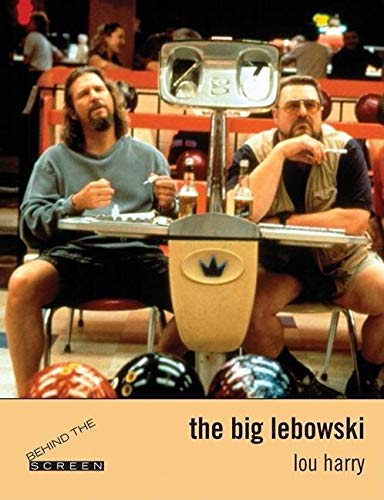
Its cover appeared on Amazon.com
But the publisher went out of business before it was actually produced.
Stuff happens.
I tried (loosely) pitching it elsewhere, but it didn’t fly.
Today, I found an old email with the manuscript attached. And it was just a matter of cut and paste to park it here.
Note: I haven’t reread it. So there may be typos, etc. If you find any, feel free to drop me a note.
Here goes:
The Big Lebowski
The Way-too-much-detail guide
By Lou Harry and Tim Farrell
Dedication
Lou: This book is humbly dedicated to PFT and the L.A. couch he lets me crash on.
Tim: This book is for my brother Pat, the Bill Kunstler to my Ron Kuby.
Introduction
A way out west there were a pair of fellas named the Coen Brothers.
At least, that’s what their lovin’ fans called them.
Their given names were Joel and Ethan and it didn’t matter that most of Hollywood—or the viewin’ public—didn’t know one from another and couldn’t pick either of them out of a line-up. They were the Coen Brothers and they made movies that were like nobody else’s movies.
Now, there was a lot about these Coen Brothers that didn’t make a lot of sense in Hollywood. And a lot about their movies like-wise.
These movies didn’t follow formula and they didn’t seem like they were made by a committee. You watched them and you never felt like guys on the street were polled to see if they liked something about the movie or didn’t like something else. You watched these movies and you might like some of them a lot and you might like some of them a little less, but you never felt like these Coen Brothers weren’t in charge.
One of these movies is the subject of this book. It’s a movie called The Big Lebowski, which was released to the big screens of the not-exactly-waitin’ world in 1998, the same year President Clinton ordered airstrikes on Iraq and admitted to foolin’ around with his intern. The same year Speaker of the House Newt Gingrich resigned. The same year Bob Barker taped his 5000th episode of The Price Is Right.
Right off, we should tell you that there are other books about this movie. One’s called The Big Lebowski: The Making of a Coen Brothers Film. You might want to read that one, too. Or maybe you already have. It’s different from this book. It’s bigger, for one. And it’s older. It came out around the time that the movie came out. It’s got all kinds of insidery stuff because the author, fella named William Preston Robertson, is a friend of the Coen Brothers.
This book is a little different. It’s not a “making of” book. It’s a book for people like us. People who love the movie and are kind of into free association, random facts, and skewered perspectives (sound like you?). In its own small way, it’s kind of like James Joyce’s masterpiece Ulysses (bear with us on this one). In that book, you might or might not recall, Joyce saw the history of mankind in a single day of one man’s life.
We’re not quite that extreme. But we do see a lot of stuff in this 117-minute movie.
Here’s how this here volume is going to work: We’ve broken The Big Lebowski down into sequences. Sometimes these are single scenes, sometimes more. For each of these, we’ve dug up some background information, expounded on a point of interest, or took off on a tangent or two. Like the movie, this book is kind of disconnected and maybe rambles a little and goes off in directions that might or might not seem relevant to the movie at hand.
And it’s a book that might tell you things you heard elsewhere and might tell you some things you haven’t.
But we hope that’s why you find the book so darned interesting.
Oh look, I’m rambling again.
A tumbleweed (1) tumbles across the landscape (2), heading west to the Pacific Ocean. Our Narrator, with a cowboy drawl, introduces the city of Los Angeles (3) and tells of the Dude (4)—“the man for his time and place.”
(1) Taking a Tumble
“Tumbling Tumbleweeds” is an ode to a philosophy of letting the world take you wherever it wants to. “Cares of the past are behind/Nowhere to go but I’ll find/Just were the trail will wind/Drifting along with the tumbling tumble weed.”
It’s a perfect way to introduce The Dude, his universe, and his story.
What it isn’t is an authentic cowboy song. Turns out Tumbling Tumbleweeds was actually written in the 1930s by a guy named Bob Nolan, who was working as a caddy in Los Angeles. It was made famous by Gene Autry, a movie cowboy who, for a while, owned the Los Angeles Angels.
(2) Taco to Go
One landmark visited by the tumbleweed is Benitos Original Taco Shop (“home of the rolled taco”). While Benitos still exists, this location is no more. “Unfortunately, that building was demolished in 2000 forcing us to move to a nearby location,” reports Mike Mergenthaler, president of the company, adding, “Interesting that that film warrants a book. I loved it, but didn’t think it had many allies.”
(3) Touched by the Angels
Getting back to the subject of angels, the Narrator refers to Los Angeles by its popular nickname “The City of Angels”—although, he says, “I didn’t find it to be that exactly.” You probably wouldn’t either if you wandered around that city or the communities that surround it.
Seems we fallible humans are in the habit of naming unangelic places ironically. The official name of Bangkok, Thailand, is actually “Krung Thep,” which means…”The City of Angels.”
So why that name?
Los Angeles, the moniker, is rooted in a decision in 1781 on the part of Spanish settlers to name the area (deep breath now) El Pueblo de Nuestra Señora la Reina de Los Angeles de Porciúncula. That translates as The Town of Our Lady the Queen of the Angels of Porciúncula. From there, the name was reduced to La Ciudad de los Angeles (City of Angels) and then truncated further to a mere Los Angeles. Stick around another half century and maybe we’ll just be calling it Los.
Need one more bit of random L.A. info? That’s Pomona, the Roman goddess of fruits and nuts on the official seal of Los Angeles County. Win a bar bet with that. Go ahead.
(4) Dude the Obscure
The Narrator says right off that this is the story of Jeff Lebowski, but that he called himself “the Dude.” The Narrator says that that’s a name no one would self-apply where he comes from.
Why not?
Because technically, the Dude is the polar opposite of a “dude.”
A dude, by definition, is a man sharp in dress or appearance—or a city person who visits a ranch. Neither seems to fit Jeff Lebowski.
The word has been traced back to 1877 when not-yet-world-famous artist Frederic Remington said, “Don’t send me any more [drawings of] women or any more dudes…Send me Indians, cowboys, villains or toughs.” It transitioned from its snooty roots to mean a man—just about any man—in the 1960s (i.e. ‘That dude is really far out.”) In 1972, there was even a Broadway musical called Dude, from the creators of Hair. It had characters named Zero, Hero, Echo, Extra, Esso, Nero, Texaco, and, of course Dude. Actually two Dudes, one as a man and one as a boy. Dude as a boy was played by Ralph Carter, of TV’s Good Times. Dude closed on Broadway after 16 previews and 16 regular performances.
Wait. Train of thought kind of derailed there. Good Times…Dude: The Musical…Frederic Remington…
That’s it—the evolution of the term “dude.”
In the 1990, the expression transformed into an all purpose exclamation, as in “Dude!” That’s about as far as a word can get, don’t ya think?
Oh, and another thing. The Dude is loosely based on a movie producer/distributor named Jeff Dowd. Unlike Jeff Lebowski, though, the Dude is gainfully employed and very successful, having worked in various capacities on films ranging from Chariots of Fire to Fergully: The Last Rainforest.
How similar is he to the character in the movie? Here’s what he told MSNBC: “A lot of the body language is 110 percent spot on. That’s very, very similar. Some of the dress is pretty close. This is what Joel and Ethan imaged I would have been like in the ‘70s. There was a period of time after when we were very active politically in the late ‘60s — there was no “movement” anymore. A fair amount of people hung out for a couple years. We were hanging pretty heavy, and indeed for a while we drank white Russians somewhere between tequila sunrises and Harvey Wallbangers, or whatever the drink of season was.”
And, yes, like his alter ego, he claims to have a rug that ties the room together.
And like the other other Jeff Lebowski, Dowd has the key to a city. In his case, it’s the key to the city of Louisville, which was given to him by the mayor at the start of the 2005 Lebowski Fest. More on the Fest later.
The Dude takes a drink of half and half at Ralphs Supermarket (1), buys the rest with a $.69 check (2), catches a glimpse of George Bush on the television declaring “This aggression will not stand,” (3).
(1) Stocked Market
First of all, let’s get one thing straight. It’s Ralphs. Not Ralph’s.
George Albert Ralphs founded Ralphs Grocery Company in 1873 and there’ve been misplaced apostrophes ever since.
(2) The Date Debate
Yes, the check that the Dude writes at Ralphs is dated September 11th. And, yes, the movie has that George Bush-ian/Saddam Hussein undercurrent. But we don’t want to fuel any conspiracy theories.
We are, however, very interested in the doodles on the top part of the Dude’s checkbook. There’s the one that looks like all he had handy was a red Sharpee. There’s the obligatory spiral. And there’s one phone number that looks like, well, we won’t tell you. Because when we put the Venice area code in front of it and called, we got someone really pissed off.
(3) “This Aggression Will Not Stand”
We don’t want to get all political here. Whether you are a Republican or a Democrat shouldn’t influence too strongly whether or not you like this movie. It’s not like Jane Fonda trying to watch Red Dawn or Newt Gingrich digging Alice’s Restaurant. But there’s clearly some political stuff in The Big Lebowski that should be reckoned with. Very early on, for instance, we get a glimpse of George Bush (the first one) and his impassioned insistence that Iraq’s entrance into Kuwait will be addressed. He did address it, in a series of events collectively known as The Gulf War back before we knew there would be a Gulf War sequel.
Bush drew the line at chasing Saddam Hussein and company back into Iraq. He later noted, “Had we gone the invasion route, the United States could conceivably still be an occupying power in a bitterly hostile land. It would have been a dramatically different—and perhaps barren—outcome.” Hmmm.
Returning to his apartment, the Dude is attacked by a pair of thugs who pee on the Dude’s carpet (1) before realizing they have harassed the wrong Lebowski. (2)
(1) How to Remove a Urine Stain from a Rug
Let’s say that you, too, share your name with a man whose wife pisses off some people whose goons see micturation as a weapon. How do you deal with the lingering after-effects without demanding that the person responsible replace the rug?
First, act quickly. You want to avoid bacteria and the growth of mold. Blot up what’s there with white cloth (that way you can see if there’s more to absorb). Wet the rug with clean water and sprinkle it with some baking soda (yes, for the same reason there’s baking soda in your refrigerator—although don’t use that one. Get a fresh box.) After rubbing in the baking soda, let it dry and then have at it with a vacuum or brush.
(2) What’s In a Name?
There are at least eight other people in the United States with the same name as this books co-author, Lou Harry. Three of them, however, spell their name Lewis Harry, which is just wrong.
There are armies of Tim Farrells. Before you ask one to sign this book, make sure you have the right one. If he’s playing an accoustic guitar and has a neatly trimmed beard, you’ve got the wrong guy.
Set to the sound of Bob Dylan’s “The Man in Me,”(1) the bowling-alley (2) title sequence includes crashing pins (3) and shots of the disinfecting of bowling shoes (4)—the latter as Ethan Coen gets credit for producing and both producers for directing. (5). The Dude’s bowling partner, Vietnam vet buddy Walter (6) convinced the Dude that the “unchecked aggression” has to be dealt with.
(1) What About Bob?
“The Man in Me” comes from Bob Dylan’s 1970 album New Morning. What was so new about it? Well, after the roundly dismissed Self-Portrait (Rolling Stones critic Greil Marcus began his oft-quoted review with the line “What is this shit?”), there was nowhere to go but up. Thus, many critics and fans were quick to hail “New Morning” as a comeback—even though they didn’t quite know what to make of their favorite sage beginning a song with “La, La, La, La, La, La.”
In 1998, Dylan songs were also heard in Hope Floats (“To Make You Feel My Love”) and Fear and Loathing in Las Vegas (“Stuck Inside of Mobile with the Memphis Blues Again.”), two movies that have absolutely nothing to do with each other besides Bob.
(2) A Brief History of Bowling
While we’re on the subject of bowling, this is as good a time as any to look at the history of that great game.
Rather than present a graduate thesis on the subject, though, it would probably suffice to just look at some highlights.
5200-ish B.C. A child is buried with bowling balls and pins—at least, that’s how they look to British anthropologist Sir Flinders Petrie, who discovered them in the 1930s.
1366 King Edward IV banned bowling because his troops were focusing more on the pins than on archery. At least, that’s how the story goes.
1611 Captain John Smith unhappily notes that the Jamestown colonists are bowling. It is soon declared illegal.
1819 Rip Van Winkle takes in a game of “ninepins” just before taking a long snooze in the story by Washington Irving.
1895 The rules of bowling are standardized (including adding a tenth pin). The historic event takes place at Beethoven Hall in New York. The American Bowling Congress is formed. National competitions begin.
- Brunswick introduces the first Mineralite ball, which replaces the rubber ball (which had replaced the wooden ball) as the standard.
- The first pin-setting machine is introduced.
- Championship Bowling is introduced to television audiences.
1984 The National Bowling Hall of Fame opens in St. Louis.
- The Big Lebowski is released.
(3) Working for Tips
Want that last pin to drop? It only takes a 7.5 degree tip for a bowling pin to go down for the count.
While we’re in the random factoid area, consider that there are about 6 quintillion possible ways a bowling game could go for you. That’s considering everything from gutter to strike in every possible shot. Of course, there’s only 301 possible scores (0 through 300), unless you consider the perhaps apocryphal tale of the man who was one shot away from a 300 game, rolled his final ball, knocked down nine pins and split another in half, leaving half a pin standing, thus scoring a 299 ½.
(4) Let Us Spray
Yes, there is such a thing as bowling shoe spray. And it’s a really good thing that somebody makes it. In what other public leisure activity does such intimate equipment get passed around like VD at college on a snow day? There could even be VD in those shoes. But thankfully, you’ll never have to worry about it. That’s because the hospital-grade spray that most bowling centers use can kill Herpes 1 and 2. It’s also strong enough to use in toilets, on telephones and colostomy bags. It says so right on the back of the can.
(5) For Its Time
It has been argued that The Big Lebowski—which was primarily written around the time of The Hudsucker Proxy—would not exist if not for the success of Fargo. That film landed a Best Picture Oscar nomination and scored a Best Actress statuette for Frances McDormand (who married Joel in 1984, the same year that Blood Simple was released.) and Best Screenplay Written Directly for the Screen one for Joel and Ethan.
If a movie like Fargo succeeds,” said Ethan, “then clearly nothing makes much sense, and so, you know, you might as well make whatever kind of movie you want and hope for the best.”
Thus, Lebowski.
(6) Time to Stretch the Truth
“What’s it like working with the Coen Brothers?” Time…okay, Time Canada…asked John Goodman.
“It’s like doing a movie at Hef’s mansion. The bunnies come around with martinis at appropriate hours.”
“It’s not at all like that, huh?” responded the reporter.
“No,” said Goodman. “But why shouldn’t it be?”
When Time…the real one, not the Canadian one, asked Jeff Bridges about the appeal of the Dude, he said, “A fella who accepts himself and is relaxed into who he is–that appeals to people. And his relationship with John Goodman’s Vietnam vet–you wouldn’t think they would ever be friends. Somehow the fact that they are gives hope to the world.”
The Dude gets a tour of the Lebowski mansion from the sycophantic staffer, Brandt, who proudly shows off his boss’ key to the city of Pasadena (1). The Dude pauses in front of a Time Magazine Man of the Year mirror (2) before meeting Lebowski, who browbeats him. After the meeting, the Dude encounters Lebowski’s young wife, Bunny (3), who propositions him…for a fee.
(1) Key Club
The key to a city isn’t incredibly difficult to get, as most city governments offer one or an equivalent. Of course, it really helps if you are famous. And it doesn’t really matter why you’re famous. Las Vegas, for instance, has a history of throwing the keys around like its going out of style (Charo, the members of Creed, and the California Raisins are all past recipients.) You also have a good chance if you happen to fight crime (Superman received Metropolis’ highest honor in 1965). And if you are a ruthless dictator of a country in the Middle East and are visiting Detroit, like Saddam Hussein did in 1980, then get out your polishing rag, because that brass beauty is as good as yours.
(2) Time on their Side
Since 1927, Time Magazine has annually elected at least one person as its “Man of the Year.” The overwhelming majority of people selected are politicians (Herbert Hoover is the only eligible U.S. President eligible not to have received the honor.) Adolph Hitler, Josef Stalin and the Ayatollah Khomeini have all graced the year-end cover, as well as business moguls Walter Chrysler, Ted Turner and Bill Gates.
On several occasions, Time, because it’s staffed by a wacky bunch of news people, have taken the liberty of awarding the honor to groups (Hungarian Freedom Fighters, 1956) inanimate objects (Computers, 1982) and really big things (Planet Earth, 1988). Only one entertainment celebrity has ever been named, U2 singer and activist Bono (2005).
One Man of the Year that popular history has somewhat forgotten about is Owen D. Young (1929), who founded RCA, became Chairman of the Board at General Electric and drafted a WWI reparations plan for Europe, all in the span of a decade. But he didn’t write “Sunday, Bloody Sunday,” so he’s, you know, not that important.
(3) Reid my Lips
Now, we’re not ones to pretend to be able to see the future. But we will say this with a certain degree of confidence: Tara Reid will never, ever be in another movie even close to as good as The Big Lebowski. But just about everyone else in the movie has had other things worth watching (see page XX.)
For the record, Ms. Reid never made anything even close to as hardcore as Logjammin’. But if you really must see more of her than you see in Lebowski, consider Body Shots (1999). That’s all we’re sayin’ about that.
Back at the bowling alley (1), Walter—with his ex-wife’s show dog in tow (2)—quotes Theodore Herzl before pulling a gun on a competing bowler who he claims went over the line.
(1) A Star is Destroyed
Let us pause for a moment of silence for Hollywood Star Lanes, where The Big Lebowski’s bowling sequences were shot. Opened at 5227 Santa Monica Blvd in 1964 (singer Jimmy Rodgers, he of “Kisses Sweeter Than Wine,” was on hand), the 24-hour bowling center was Hollywood’s only.
The last balls were rolled there on August 7, 2002. On that day, owner Sam Burnese personally autographed the entire collection of bowling pins and passed them out to loyalists. The site is now home to an elementary school. Some people just don’t have priorities.
While Hollywood Star Lanes may be gone, pieces of it remain. Lane 16 now serves as the bar top at Lucky Strike Lanes, a newfangled bowling alley/cocktail lounge at Hollywood and Highland. The alley walls are decorated with stars a la Lebowski, but you’re more likely to find Hollywood wives and their Hollywood kids—or, worse, tourists—here rather than the likes of Dude, Walter, and Donnie.
(2) “I think it’s a Pomeranian”
Is your dog 3 to 7 pounds with a heavily plumed tail that lies flat on its back? Does it have a contrasting double coat? Are you Queen Victoria?
If you answered yes to any of these questions, there is a very strong chance that your dog is in fact a Pomeranian. However, the dog that Walter is taking care of while Cynthia and Marty Ackerman are in Hawaii is most
certainly not a Pomeranian. It’s a terrier.
(3) Herzl so good
Meet Theodore Herzl. He’s the guy who said “If you will it, it is no dream” long before Walter did. In 1897, Herzl gathered together a group of like-minded individuals in Basel, Switzerland, to put the wheels in motion to found the modern state of Israel. “Perhaps in five years,” he said, “and certainly in fifty.”
Fifty-one years later, in 1948, The State of Israel was founded. A few decades later, Walter converted to Judaism.
Note: One of this book’s authors earned a B- on a test about Herzl in a Middle Eastern history class. Pretty remarkable considering Walter’s quote was the only thing that said author knew about the man.
Also note: The other author of this book is a convert to Judaism. He is not, however, a Vietnam vet with a major chip on his shoulder.
At the Dude’s apartment (1), his landlord informs that rent is past due. He also invites the Dude to his dance performance. Brandt requests a meeting, at which the Dude is informed that Lebowski’s wife has been kidnapped. (2) Since the “carpet-pissers” are suspects and the Dude has seen them, Lebowski says that he will pay the Dude to be a courier of the ransom money. (3)
(1) Executive Privilege
Notice a poster of Richard Nixon in mid approach at a bowling alley just above the Dude’s wicker bar? Back in 1947, President Harry Truman was presented with a two-lane bowling alley, located in the White House’s West Wing, for his 63rd birthday. Not the most avid kegler, Truman posed on the hardwood for a few publicity photos and then promptly never stepped foot in the room again.
But certain members of his staff didn’t want to let such a sweet setup go to waste, so they established the White House Bowling League. Anyone who had White House clearance could join, so it wasn’t long before the gardeners, janitors, secretaries and bodyguards each assembled their own teams. A few years later, the WHBL was squeezed out of the expanding White House and found a new home at the Old Executive Office Building next door.
Soon after his inauguration, Nixon installed a private office in the building and spent many late nights rolling on the nation’s most exclusive lanes. The league continued to prosper until 9/11, when White House officials shut down the lanes over security concerns.
(2) “No funny stuff”
A million dollars might seem like a lucrative payoff to a couple of nihilists, but in the grand scheme of international terrorism, it’s barely pocket change. Though the ransoms involved in kidnappings are rarely made public, Li Ka-shing, one of Asia’s most powerful businessmen, is presumed to have paid $125 million for the release of his son from capture by a Chinese gangster who went by the incredibly appropriate name “Big Spender.” He was later captured and executed.
(3) Everybody Loves Raymond
Most of the time, The Dude looks like he’s barely woken up from a big sleep—which makes sense, since Raymond Chandler’s book (and, later, film) The Big Sleep, is a major influence on The Big Lebowski.
Chandler’s first novel, like Lebowski, focuses on a world-weary guy (in this case, now-iconic private eye Phillip Marlowe) hired to clear up some personal matters for a rich man with complications involving the women in his life. They are both about men who, while being manipulated by others, try to live by some sort of personal code of honor and loyalty (even if misguided).
As with Lebowski, The Big Sleep earned more kudos for its characters and language rather than its plot. Film fans are still trying to account for all of the bodies in the Bogey and Bacall film adaptation, but history has long since determined such details to be trivial. In Roger Ebert’s essay about the film, he pointed to what was important: “The whole idea of film noir was to live through unspeakable experiences and keep your cool.”
The Dude might agree with that one.
At the alley, the Dudes attempts to quote Lenin (1) while explaining his theory to Walter: that Bunny (2) is faking the kidnapping. The purple-clad (3) Jesus, a convicted sex offender, (4) taunts the trio with his bowling prowess.
(1) “Vladamir! Ilyich! Ulyanov!”
We know Lenin didn’t say “I am the Walrus.” But here are some things he did actually say:
“While the State exists, there can be no freedom; when there is freedom, there will be no State.”
“One man with a gun can control 100 without one.”
“A lie told often enough becomes a truth.”
“It is true that liberty is precious; so precious that it must be rationed.”
(2) “This strumpet, This whore!”
If you ask certain assholes, a prostitute and/or slut by any other name is still a prostitute and/or slut. And Walter didn’t need to stop when he did in his tirade against Ms. Lebowski. He could have added woman of ill repute, courtesan, hooker, bawd, slattern, lady of the night, painted woman, cocotte, trollop, demimondaine, cyprian, camp follower, Jezebel, streetwalker, pampam, kedeshah, skeezer, pubblica moglie, commercial sex worker, harlot, blowen, Covent Garden nun, drap, scarlet woman, the town punch…
(3) Purple Reign
Purple has long been known as the color of royalty (and at least one sex offender), but have you ever wondered why that is?
Here’s your answer: Purple dye, which evidence dates back to 1900 B.C., was so expensive that only emperors, priests and noblemen could afford it.
Unlike other pigments, which could be created relatively easily from berries, leaves, or bark, purple was found only in the secretion of certain mollusks. Aristotle noted that the dye was worth at least twenty times its weight in gold.
Ironically, the first synthetic dye, accidentally developed in 1856 by William Perkin in an effort to synthesize quinine, was purple.
(4) Offensive Behavior
Jesus’ ridiculously massive male appendage (which the character was originally to sport the entire film) is visible only in the scene where he goes door to door admitting to his crimes.
In California, by the way, there are many things you can do that, if caught, tried, and found guilty, could earn you the label “sex offender.” These include: Sodomy (that’s a 286), Sodomy While Confined in Prison (286E), Oral Copulation (288A) and Sexual Penetration by Foreign Object (289).
Listening to his Walkman at home, the Dude realizes too late that a woman and two men are in his apartment. He is punched (1), which leads to the movie’s first dream sequence. In this one, the Dude flies over L.A., plummets to the Earth because of the weight of a bowling ball (2) on his hand, stands miniaturized on a bowling alley as a ball rolls toward him, gets absorbed by one of the finger holes of the ball, and rolls toward the pins.
(1) No Bull
In the movies, a single punch is often enough to knock a man out. But what about in the real world?
Well, it could actually be worse. In January of 2006, a London gentlemen’s club bouncer punched a guy who was fondling one of the dancers and killed him nearly instantly. Of course, the bouncer was a heavyweight boxer, so that might have been a factor.
Speaking of which, some boxers in history were better known than others for their ability to deliver one-punch knockouts—George Foreman, Mike Tyson and Rocky Marciano among them. These guys had bricks in their fists, but even they might have trouble taking out Mas Oyama, a karate champion who proved his strength by fighting raging bulls. Not Robert DeNiro. Not Scottie Pippen. Actual raging bulls. Of 52 battles with 52 beasts, Oyama killed three instantly. Forty-nine of them lost horns.
(2a) The Best Bowling Movies (Besides The Big Lebowski)
This short list begins with Kingpin and ends with Kingpin.
Kingpin is a 1996 comedy in which Woody Harrelson plays a champ who loses his bowling hand after cheating the wrong guys. Years later, he attempts to mentor an Amish guy (Randy Quaid) who’s a natural at the game. Bill Murray’s in it. The Farrelly Brothers directed it (what is it about brothers and bowling movies?)
(2b) The Worst Bowling Movies
Since we only picked one besides-Lebowski best, it seems only fair to limited our worst to one.
This short list begins with Dreamer (1979) and ends with Dreamer (1979).
There’s a good chance you’ve never seen Dreamer. That’s okay. We did. Or, at least, one of us did. The other took his word for it.
Not to be confused with the more recent horse flick starring Dakota Fanning, Dreamer comes from the how-can-we-copy-Rocky genre of American cinema that includes such classic competitive films as Diving In (diving, of course) and Over the Top (arm wrestling). Dreamer tells the story of a bowler (Tim Matheson), guided by a wise coach (Jack Warden) who finds love with the right woman (Susan Blakely—who also starred in Over the Top…hmmmm.).
You may remember Tim Matheson from Animal House, which was released just a year earlier. You might remember Susan Blakely from the landmark miniseries Rich Man, Poor Man. And you may remember Jack Warden as a football coach in Heaven Can Wait, as a football coach in Brian’s Song, and as a baseball coach in the Bad News Bears TV series.
Two things you know as soon as Dreamer begins: 1.) The last scene will involve a slow motion shot of a ball heading toward the pins. 2.) Warden’s character will have a heart attack on a bowling lane.
Both, of course, happen in due course. And it should be noted that on January 2, 2006, USBC bowler Ed Lorenz collapsed and died on the lane where he had just bowled his third 300 game. This has nothing to do with Dreamer or The Big Lebowski but we couldn’t help it. Had to mention it.
But enough about bowling for now.
Except to say that if you watch carefully, you’ll note that the Dude is never actually seen bowling in The Big Lebowski—except, sort of, in one of the dream sequences
Walter insists on joining the Dude (1) on the drop off, planning to exchange a “ringer” bag and keep the million-dollar ransom. The drop is botched and the alleged kidnappers flee. Walter dives out of the car, causing his Uzi (2) to go off when it hits the pavement.
(1a) A Bridges Too Early
Jeff Bridges plays a California slacker with a problematic car and a propensity for pullover sweaters who gets into trouble (including getting beat up by strangers) as his flying-off-the-handle Vietnam vet pal prods him into involvement with a wealthy man from Pasadena involved in a major crime and, in the process, destroys an innocent man’s car.
Yes, that’s a synopsis of The Big Lebowski.
But it’s also the story of 1981’s Cutter’s Way, which should be mandatory viewing for any Lebowski fan.
Cutter’s Way tells of, well, we just told you. The primarily difference between it and Lebowski, though, are that 1.) Cutter is a dramatic thriller, 2.) Bridges is significantly thinner, and 3.) Lisa Eichhorn—as the third wheel—is a lot more attractive than Steve Buscemi.
Landing in the Bridges lineup between Heaven’s Gate and Tron, the film got slammed twice at the box office—first in its brief initial release as Cutter and Bone, then under the United Artists Classics banner as Cutter’s Way. It has since earned something of an academic/cult following, but its reputation would certainly be greater if director Ivan Passer’s career had developed into anything. That is, if Cutter’s Way were the equivalent career-wise of Martin Scorsese’s Mean Streets rather than an odd bit of brilliance before Creator, Haunted Summer and some made-for-TV flicks.
(1b) Good as Gould
While we’re playing “spot the influences,” you might want to check your video store for Robert Altman’s 1973 film The Long Goodbye (And, if you find it, that means you have a darn good video store).
During the ‘70s, Altman’s shtick was subverting just about every movie genre. He reinvented the war film with M*A*S*H*, deconstructed the western in McCabe and Mrs. Miller, had a go at the Depression-era gangster movie in Thieves Like Us, took shots at the musical in Nashville, and offered his take on the European art-house flick in Interiors and Three Women. It only stood to reason that he would fashion a detective film—and that it would look at feel like no detective film before it.
That film was The Long Goodbye. Yes, it was based on the Raymond Chandler novel. But in Leigh Bracket’s adaptation, Philip Marlowe is a creature of ‘70s, not ‘40s, Los Angeles. His attitude is more laisez faire, his methodology more seemingly random, and the characters he meets more loopy.
Like The Big Lebowski, The Long Goodbye uses the conventions of the detective novel as a jumping off point. Like Lebowski, it’s less interested in the plot than it is in the characters met along the way. And in both films, it appears that the main character has never used a comb.
Like The Big Lebowski (and Cutter’s Way, for that matter), The Long Goodbye didn’t make much of a dent at the box office. Unlike those films, though, it did raise a stink from detective novel purists, who particularly objected to the reimagined ending [spoiler alert] in which Marlowe, after realizing the his buddy (played by baseball player Jim Bouton) screwed him over, shoots the guy in cold blood and walks away.
It’s an act that would be the equivalent of ending The Big Lebowski with Jeff Bridges hurling a bowling ball at David Huddleston’s head.
(2) Can You Believe the Gal?
The Uzi is named for Uziel Gal, an officer in the Israel army, who developed the weapon in the 1950s. Word is that the man tried to keep his name off the gun, but the manufacturer thought it was just too perfect—Uziel, in Hebrew, stands for “God is my might” or “God is my strength.”
Like the words Kleenex and Xerox, Uzi is a word that often is used improperly to define its entire product category. While Uzi’s are 9mm semi-automatic weapons, not all 9 mm semi-automatic weapons are Uzis.
At the bowling alley, Walter flies into a rage when he discovers that he can’t play in the tournament because he’s “Shomer Shabbos.” (1) When the trio leaves the bowling alley, they discover that the car—which still contained the original briefcase—has been stolen. The Dude opts to walk home. (2)
(1) Shabbos
Converted Jew Walter insists that he doesn’t roll on Shabbos. You may find yourself in Donny-like wonder as to why the faith of Walter’s fathers—okay, the faith of his wife’s fathers—would ban such activity.
For the Shomer Shabbos Jew, it’s not about avoiding bowling. It’s about honoring a commandment. The Good Book is a little inconsistent, though, about the reasons. In the Book of Exodus, believers are asked to remember that God made heaven, earth and sea and all that is in them and He rested on the seventh day. Therefor, God blesseth the Sabbath Day…” Over in Deuteronomy, on the other hand, “You shall remember that you were a slave in Egypt and God took you out with a mighty hand and an outstretched arm. Therefore, God commanded you to keep the Sabbath day.”
Whatever the reason, those Jews who take this sort of thing literally avoid everything Walter says—no driving, riding in a car, working, handling money, turning on an oven…
By getting in the car with the Dude, however, Walter becomes MeChallel Shabbos or “Sabbath Violator.”
(2) Take a Hike
Assuming that the lanes in the movie are meant to be The Hollywood Star Lanes on Santa Monica Blvd.—and that the Dude lives (as his checkbook at Ralphs would prove) in Venice—then he’d be looking at an approximately 20 mile walk home.
The Dude reports the stolen car. Maude Lebowski, daughter of the big guy, calls, saying that she has the rug. At Maude’s studio, the Dude finds her swinging nude (1) from a harness and splatter paint on a canvas. (2) She make some plot points and insists that the Dude get a medical examination with her doctor in apology for the punched jaw.
- Full Frontal
Julianne Moore is the rare legit actress who has granted the viewing public full-frontal access. It started with the Robert Altman film Short Cuts, where it was clear that the curtains matched the sofa—or however it is that expression goes. Passionate love scenes in Body of Evidence and Boogie Nights followed. Then came the brief post-harness sneak peek in Lebowski followed by more topless bedroom action in The End of the Affair.
If you want to see John Turturro pull a full frontal, then may we suggest A Box of Moonlight?
(2) What the Fluxus was That?
Maude Lebowski, if she were, you know, real, would have most likely been labeled a Fluxus artist. This would have put her in the company of Yoko Ono, perhaps the most famous fluxist.
But don’t let that turn you off the whole movement, which encompassed everything from Nam June Paik’s video sculptures to the art of Dick Higgins, who, in one work, played 11 games of Scrabble and then used those words to write a play, to John Cage, whose “4’33” is a piano piece in which no keys are struck and the player just looks like he’s been hit with stage fright.
Fluxus, in other words, is kind of nuts. But kind of fun, even though its creators/be-ers don’t like to put a definition on it. Which makes it kind of tough for the rest of us. We do know that it rebelled against the idea that art is what is left behind by the creator. Instead, it’s about the act of creating. Or something like that.
The Dude sips a White Russian (1) while getting a ride home with Maude’s chauffeur, but is pulled from the limo and thrown into a car with Lebowski and Brandt, who shows a toe with emerald green nail polish (2) allegedly sent by the kidnappers.
(1) The Caucasian Equation
If you consider yourself a fan of The Big Lebowski, then it is imperative you how to make a perfect White Russian (For the record, the Dude drinks eight of them in the course of the film). Follow this recipe and these tips to ensure you’re imbibing a drink fit for the Dude.
Start with an Old-fashioned glass (8-10 oz. short glass tumbler)
Add the following in order:
Ice cubes
2 oz. Vodka
1 oz. Coffee Liqueur
1 1/2 oz. Light cream or half-and-half*
Use the largest ice cubes possible. Smaller cubes or chips melt faster, watering down the cocktail. Following order ensures that the vodka will not float, which could ruin the smooth taste.
Do not over-stir. Stirring causes ice to melt.
Never, under any circumstances, should you substitute milk for cream.
Non-dairy creamer is acceptable if you are stuck in the studio of a Fluxus artist.
Since this is a mixed drink, it is unnecessary to use “premium” vodka for a White Russian. However, Kahlua, a top-shelf Coffee Liqueur, is universally recommended.
* Since light cream is high in calories and fat, many people prefer half-and-half if planning to drink more than one or two in an evening (or a Wednesday afternoon).
A White Russian is a great “opening” indulgence during a night of brisk drinking as the dairy coats the stomach, helping to prevent possible stomach aches.
Apart from the fact the cream makes it “White” and the vodka makes it “Russian”, the cocktail’s name is also derived from a reactionary army that fought during the Russian Civil War (1918-1921). Though it was a period of great confusion and strife for the Russian people, the four battling factions did the historical world a favor by referring to themselves as the Red, Green, Black and White Armies (evidence of the supposed Aquamarine Army is sketchy at best). The White Russians were eradicated by the victorious Red Army, but their proud legacy of defiance is honored every time someone wants a delicious way to get hammered.
(2) “I can get you a toe by three o’clock!”
The Big Lebowski and Brandt weren’t so crazy to think that the mailed toe belonged to Bunny. Green, after all, is not exactly the most common shade of nail polish. Almost all of the major cosmetic outlets do not stock any form of green.
However, OPI, a brand only available at nail salons, sells several green polishes, including:
Electric Eel
Go On Green
Gargantuan Green Grape
Keep Off the Grass
and the absurdly named At Your Quebec And Call
In a coffeeshop (1) , Walter and the Dude debate the authenticity of the severed toe. (2)
(1) My Dinner with Lebowski
Want to dine where Walter snaps out?
Well, you can’t. That’s because Johnie’s, the coffee shop where the scene was shot, isn’t a real eatery. At least, not any more.
Here’s the story.
Johnie’s—first known as Romeo’s Time Square—was built in 1955 on a site where director/producer Cecil B. DeMille and Sydney Chaplin (brother of Charlie) once owned the Mercury Aviation Company.
Designed by Armet & Davis (a firm credited with the first Denny’s and hundreds of other coffee shops around the country), Romeo’s was a prime example of the Googie style, an architectural footnote named for an L.A. restaurant called Googie’s, which some said looked like a crashed spaceship. The style is typified by non-traditional lines and attention-catching, undisciplined design.
Two years later, Romeo’s was renamed Ram’s Coffee Shop, which it remained until 1965 when it closed, to reopen a year later as Johnie’s.
Blah blah blah. Why all this history about a diner?
Well, what’s sort of interesting (at least, to us) is that Johnie’s closed in 2000. But rather than face the wrecking ball, this loopy place on a prime piece of real estate was saved by the Los Angeles Conservancy, an historic preservation organization. The former java-and-pie joint is now opened only for location shooting.
Yes, it’s basically a movie set.
In addition to The Big Lebowski, movies that have shot here include American History X, Miracle Mile, Midnight Madness, and Short Cuts.
(2) Prior Conviction
Though Walter rarely says anything that isn’t either incorrect or completely made up, he is right when it comes to free speech issues. Sort of. Prior restraint is a term given to certain attempts at preemptive restriction of free speech. In 1931, the US Supreme Court’s first discussion of prior restraint occurred when overruling the decision of the Minnesota court to prevent a newspaper from publishing rabble-rousing stories about a mafia case before it went to trial, explaining that protection against prior restraint is the foundation of the first amendment.
But in the case of his Johnnie’s Diner outburst, it’s hard to argue for prior restraint. Walter isn’t challenging free speech restrictions; he’s just being a dick.
As the Dude gets high while taking a bath, the police call to report that the car has been found. Moments later, two nihilists (1) throws what the Dude thinks is a marmot (2) into the tub.
(1) Nothing to Lose
Why the Germans qualify as a nihilists:
1: They kidnap Bunny: Nihilists reject morality and therefore ignore morality’s most apparent implementation in the world, law.
2: Uli stars in porn films: Love is an attraction to the basic “good” of another human being, which is not compatible with nihilism. The ability to have sex without love would be a valuable trait for someone choosing to make a living off the activity.
3: They “believe in nothing”: Nihilists technically claim the paradoxical statement to be central to their ideology. However, they usually do more than just repeat it a bunch of times to everyone they talk to.
Why the Germans are full of crap.
1: Uli bums around at Bunny Lebowski’s house: A true nihilist would not associate with (or benefit from) a person like Mr. Lebowski, who is part of the “system” and a firm believer in the necessity for power and authority.
2: They demand one million dollars: Need of money is contradictory with nihilism’s complete rejection of any value system.
3: When their plan falls apart, they complain that “it’s not fair”: Nihilists wouldn’t bitch this much when things don’t go their way.
(2) I’ll take Marmots for $100, Alex.
Let’s assume that somehow you’ve landed a spot on Jeopardy. Now let’s assume further that the category is Marmots (although on Jeopardy, there would probably be some punning category name like Chateau Marmot or Bon Marmots).
Are you prepared?
You will be in a minute, once you consider these facts about this Northern Hemisphere-dwelling rodent.
- Groundhogs are a type of marmot. Therefore, the only United States holiday created to celebrate an animal is named for a marmot.
- A woodchuck is a groundhog. Same creature, different word. But it’s not as much of a tongue twister to say “How much wood would a groundhog chuck if a groundhog could chuck wood?”
- Male and female woodchucks live separately and alone.
- In the past, marmots were used to hunt for gold.
- Marmot meat is high in protein. Mongolians are said to love it
- There are 14 known species of marmot.
- Marmots hibernate—which makes them pretty boring pets for a major part of the year. Their breathing will be severely slowed down so, if you do keep one as a pet, don’t assume its dead and go and bury it or something. Come on. Think.
- It is okay to bathe a marmot—and actually a good thing because they are often infested with fleas and mites.
- According to the Los Angeles SPCA, to have a marmot in L.A., one would have to obtain a permit through the California Department of Fish & Game. Also, in some communities, you may need a special permit.
- For the record, the creature thrown in the Dude’s tub is a ferret.
The Dude reclaims his car from the impoundment lot. The briefcase is gone, but his Creedence tapes (1) are still there. At the bowling alley bar, the Dude encounters The Stranger—the narrator heard at the beginning of the film. (2) Maude calls, wanting to meet with the Dude. (3)
(1) Tape Heads
At one Lebowski Fest, a highlight of the costume competition was a fan dressed as a Creedence cassette tape.
Perhaps we should backtrack a little.
Whereas it only takes a couple of White Russians and an available lane to have your own Lebowski event, some diehard fans take their love for the movie a bit further, creating Lebowski Fests that have been staged in Louisville, Las Vegas, New York City and, inevitably, L.A. For details on upcoming events, visit http://www.lebowskifest.com
Some facts learned at that site:
- The premiere event was called “The 1rst Annual Big Lebowski What-Have-You Fest.” Subsequent ones have been shortened to simply “Lebowski Fest.”
- Lebowski fans are known as “Achievers,” as in “The Little Lebowski Urban Achievers.”
- Lebowski fest bowling events are scheduled to occur after sundown on Saturday. This way, even if you observe Shabbos, you can still play.
- The Lebowski Fests were created by a pair of fans named Will Russell and Scott Schufitt (“the Founding Dudes”).
- An L.A. Lebowski Fest attracted the likes of David Huddleston (The other Jeffrey Lebowski), Robin Jones (the check-out girl from Ralphs Supermarket), Jack Kehler (Monty the landlord), Jerry Haleva (Saddam Hussein), Peter Stormare (Uli), and, yes, Jeff Bridges himself.
(2) “Do you have to use so many cusswords?”
The Stranger asks The Dude that very question. An answer isn’t really given. But one is implied. And that implied answer is this: “Fuckin’ A. And who the fuck cares?”
Well, the Motion Picture Association of America cares a little bit. It gave the movie an R rating in part because of “Pervasive Strong Language,” which is putting it mildly. By our count The Big Lebowski contains 281 uses of the word fuck (that’s 2.4 f-words per minute of screen time).
For comparison, such legendary curse-fests as Scarface and Goodfellas contain, respectively, 208 and 246 respectively. Jay and Silent Bob Strike Back has 228 and Bad Santa has a mere 147. (thank you, listology.com)
The first in The Big Lebowski, by the way, is uttered at about the four-minute mark where one of Treehorn’s goons asks “Where’s the fucking money, shithead?” The last occurs in the scene on the cliffs, when Walter effectively sums up the movie by saying, “Awww, fuck it Dude. Let’s go bowling.”
(3) The Big Lubanski
Okay, this doesn’t have anything to do with this particular scene. But it is worth noting. The Dude’s real-life almost-namesake, Detroit’s Ed Lubanski, played in the St. Louis Browns minor league system for three years before quitting to become a professional bowler. Good move. He was named Bowler of the Year in 1959, authored The Pro’s Handbook of Bowling and rolled 11 sanctioned 300 games in his career—including two back-to-back. He is a member of the National Polish-American Sports Hall of Fame.
Also in that esteemed group: fellow bowler Billy Golembiewski. basketball player Carol Blazejowski, baseball player Jenny Romatowski, hocky star Pete Stemkowski, and footballer Zeke Bratkowski.
Maude identifies the ferret-wielding nihilist as Bunny’s porn co-star and a member of Autobahn, a techno band (1) found in her record collection (2) Maude asks again for the Dude to visit her doctor, which he does.
(1) Teutonic Techno
Naming your band after the German highway system might be a dumb idea, but it’s also a clever tribute. Though there is no German techno pop band called Autobahn, the allusion in The Big Lebowski is obvious. Autobahn was the enormously popular 1974 release by Kraftwerk, an outfit considered by many as creators of electronic pop. The experimental album was very well received in many countries, including the United States, where it peaked at number five on the pop charts. (If only the members of Autobahn believed in themselves a little more, maybe they would have been as successful. But, that’s a little difficult for them. They don’t believe in anything.)
It’s fair to say that, despite all the German lyrics about computers and robot-inspired vocals, Kraftwerk holds a significant place in the evolution of popular music. For the innovations in synthesizer utilization alone, they deserve respect in the world of popular music. Just think about this: No Kraftwerk, no New Wave. No New Wave, no Kajagoogoo. Actually, maybe that’s not such a bad thing.
(2) Settle a Nagelbett
Autobah’s album title, Nagelbett, translates as “Nail Bed.” And it’s part of what appears to be a decent sized record collection.
You remember records, don’t you? About the size of a Dominos pizza box, record albums (a.k.a. platters, LPs, and vinyl) were the home music option of choice for about 70 years. Reel to reel came and went. The 8-track came and went. The cassette came and, while sticking around longer, has now made its last gasp. None had the staying power of the big disc.
To the tune of “Lookin’ Out My Back Door” (1), the Dude attempts to flick the butt of his joint out his car window but, since the window is closed, it rebounds off and lands in his lap. While attempting to put it out, he collides with some garbage cans. During the recovery process, he discovers a scrap of paper in the car seat—a high-school History paper (2) on the Louisiana Purchase (3) by Larry Sellers.
(1a) Giving Creedence to Himself
Poor John Fogerty. He gives the music world no less than 17 top-forty hits with his band Creedence Clearwater Revival and what does he get in return? A lawsuit filed by his former record label, just for not being creative enough.
Fogerty had a long history of problems with Fantasy Records, who held the rights the CCR catalog. But in 1985, Fantasy took Fogerty to court, complaining that Fogerty’s solo single “The Old Man Down the Road” sounded too much like a song his company had the rights to, a seemingly legitimate complaint. However, Fantasy claimed the song that had been plagiarized was “Run Through the Jungle,” which Fogerty had written for Creedence, more than a decade earlier. A particularly memorable image from the trial was Fogerty taking to his guitar in an effort to explain to the jury how the two songs differed and how it’s common for songwriters to repeatedly write in similar keys and rhythms. He won the case.
In 2005, Fantasy Records, who had since been bought by another label, finally made amends with Fogerty, restoring royalty rights and giving him his tapes back. Just like the Dude at the impound.
(1b) Tuneless
And woe is the person who bought The Big Lebowski original soundtrack album in hopes of hearing some Creedence Clearwater Revival songs. Alas, “Lookin’ Out My Back Door” and “Run Through the Jungle” are M.I.A., unlike the Dude’s tape at the impoundment lot.
A little perspective, though, might help mitigate the disappointment of the disc-buyer.
Consider, for instance, that Al Jarreau’s “Boogie Down” is not include on the soundtrack of Breakin’.’ Nor is The Cure’s “Boys Don’t Cry” featured on the CD of Boys Don’t Cry. The hit “Into the Groove” isn’t on the Desperately Seeking Susan disc. And “Larger than Life” by the Backstreet Boys is absent from the OSR for Napoleon Dynamite.
Feel better?
(2) Topics We’d Consider if We had to Write a Paper on The Big Lebowski for a Film Studies Course Where We Really Want to Kiss the Ass of the Teacher
Can the Auteur Theory be Modified to the Plural?
In this paper, we analyze Lebowski using the “auteur theory,” pioneered by French critics/filmmakers such as Francois Truffaut. This theory stressed that the director is the true author, the guiding visionary of a film. All other jobs are secondary. Strict adherence to this theory would imply that Joel Coen, by virtue of his role as director, is the author of the film. Try telling that to Ethan.
The Rug that Ties the Room Together: Purpose in Post-Vietnam America
We compare and contrast two things that are taken away, the rug and Americas innocent. Both departures leave confusion (Dude), anger (Walter), befuddlement (Donnie), powerful arrogance (Lebowski), and the pathetic desire to kowtow to that power (Brandt). Plus, of course, random violence (the nihilists).
That Had Not Occurred to Us, Dude: What did Brandt Know and When Did He Know It?
Is Brandt, Mr. Lebowski’s unflinchingly devoted personal assistant, aware of his employer’s role in the conspiracy? The family foundation’s control of all the Lebowskis’ finances as well as a supposition of his own duties are taken into account in this hypothetical delineation.
Nobody F–ks with the Jesus: The role of Catholicism in The Big Lebowski
An assertion that Jesus Quintana represents the Catholic Church’s record of corruption and intimidation in its history. Arguments include his association with bowling partner Liam O’Brien (Irish and Hispanics are the two most recognizable ethnicities of the faith), his hatred of Walter (anti-Semitism), the garish nature of his dress (abuse of wealth by clergy) and his history of child molestation (child molestation).
Duddah: Enlightenment vs. an Impressive Thread Count
From the perspective of this analytical paper, the Dude’s problems begin not when the thugs shove his head in the toilet, but when he becomes too involved with material goods. To achieve the optimal state, one must not become too attached to Earthly things—especially one’s favorite rugs.
What happens when one foregoes wordly goods? Where not sure what happens in the championships, but we do know that no other sports offers the Buddhist-like prospect of achieving perfection, as in, a perfect game—one that, in its perfection, is exactly the same as every other perfect game.
You Mean Coitus?: Sex in The Big Lebowski
The role of sex in human behavior as a vehicle of pleasure as well as an act of reproduction is examined, with Bunny Lebowski and her pimp/film producer Jackie Treehorn representing one aspect and Maude Lebowski the other. An analysis of the Dude’s own views of sexuality (inability to commit, fantasies involving bowling) is also offered.
(3) “Is This Your Homework, Larry?!?”
From the looks of his D, Larry Sellers couldn’t tell you one thing about the Louisiana Purchase. But we can.
In 1763, France lost the French and Indian War (remember, that’s the confusingly-titled war. The French and the Indians were on the same side, against the British.) As a result, France had to give up New Orleans and control of the Mississippi river, which Great Britain turned right around and gave it to Spain as trade for Florida. Flash forward to 1802. The United States is plugging along just fine. Though they didn’t control the Mississippi, Spain had no problem sharing the river and port with the newborn country. Then Napoleon comes to power and gets all these big ideas about building up an empire in the New World. He makes a deal with Spain to get New Orleans back. The Americans, fearing that France is up to something, freak the hell out. President Jefferson, who gets along with France, sends James Monroe and a guy name Livingston across the pond to see about buying New Orleans and other pieces of land for $10 million. Napoleon says, “Ok, my New World plan isn’t really working out. Between the malaria and the slave uprisings, my troops are getting their asses handed to them down in Haiti. And the way I see it, if I can’t control Haiti, what good is New Orleans?” (note: this may not have been his actual quote). So, Napoleon offers all of his Western land (called Louisiana) to the US. They settle on a price tag of $15 million.
Here’s why this is such a big deal, and worth noting on the back of every nickel. At that time, the land they called Louisiana was about 800,ooo square miles. The purchase doubled the size of the United States, and still represents over twenty-percent of the country today.
So there you go.
At his landlord’s dance recital—and around discussions of the In-N-Out Burger (1)— Walter tells the Dude that he has tracked down Larry Sellers, who is the son of a TV writer. At the Sellers’ home, they confront (2) Larryand his iron-lung-bound father (3), who wrote the TV show Branded. (4) Unable to get a response from Larry, Walter goes outside and attacks the new Corvette he assumes belongs to Sellers. It doesn’t.
(1) The Ins and Outs
“Those are good burgers, Walter.”
Donny has good taste.
An L.A. staple for more than half a century, In-N-Out Burger was founded in 1948 by Harry and Esther Snyder of Baldwin Park, California. Their innovation? Using speaker boxes instead of carhops to take food orders and, thus, becoming the first drive-thru hamburger stand (this was four years before California rival Fatburger was born).
The In-N-Outers never included freezers or microwaves in their burger joints. Instead, the Snyders and their children pushed for freshness and service (the shakes are made with real ice cream), even creating a perverse sounding In-N-Out University to train managers. The family has never franchised or taken the business public, even as it grew to over 140 locations.
- Lost in Translation
In his attempted intimidation of Larry, Walter recites what has become one of the most quoted Lebowski-isms. We realize you are all grown ups reading this, but instead of repeating, we thought we’d just replace it, as is done in the TV version, with this phrase: “You see what happens when you have fun with a stranger in the Alps?”
(3) Irony Lung
The first iron lung was actually an iron box and a pair of vacuum cleaners. Yet it worked to force breathing by pushing and pulling on the chest. Refined since then (that one was about the size of a compact car), the iron lung’s primary usage these days are for situations where spinal cord injury or disease paralyzes the diaphragm or when stroke, tumor or injury screws up the brain’s respiration control area.
(3) “And they say he ran away…Branded!”
During the infancy of American television, the majority of programs aired in the evening were variety shows, game shows and teleplays, all formats that were holdovers from the golden era of radio. Beginning with Gunsmoke in 1955, the western, another radio staple, began to emerge as the dominant attraction. The image of the cowboy taming the lawless and savage west was the ultimate symbol of masculinity and patriotism, which appealed to a country entrenched in the depths of the cold war. By 1958, seven of the top ten shows on prime-time television were westerns, though Branded, which only ran for 48 episodes—not 158—only cracked the top twenty once. The show was produced by Goodson/Todman, the masterminds behind The Price is Right and featured Chuck Conners (who also starred as TV’s The Rifleman) as Captain Jason McCord, an innocent man court-martialed for cowardice.
The real Branded series was by a guy named Larry Cohen, who managed to stay out of an iron lung and, instead, produced Q, directed It’s Alive III: Island of the Alive, and wrote Phone Booth.
As for the television western, its stranglehold of the Nielsen ratings continued through the mid-1960s before slowly regressing and completely vanishing from prime-time schedules by 1979. Unless you count Dr Quinn, Medicine Woman. Which we don’t.
The rug pee-ers return (1), taking the Dude to see Jackie, who is presiding over a bacchic shindig on the beach—including nude trampolining (2) . Plots points are interrupted by a phone call. Treehorn writes something down and when he leaves the room, the Dude traces the top of the paper so as to reveal what was drawn (3)—a man with an enormous phallus. The Dude passes out from a spiked White Russian. (4)
(1) Clothes Make the Henchman
In yet another example of why all evil henchmen should be uniformed, Jackie’s Treehorn’s two bumbling toadies reappear, wearing each other’s clothes.
(2) Bouncing Boobs
Frankly, we don’t know if action such as that demonstrated by the nude trampolinist is any more dangerous that clothed trampoline bouncing. In 2004 alone, though, according to the Consumer Product Safety Commission, more than 89,000 people landed in the emergency room with trampoline-related damages. Please bounce carefully.
(2) I Spy (a Continuity Error)
Note that this is the first time during the film that the Dude really seems to be doing any detective work to solve the kidnapping mystery. Note that he gets no information whatsoever for his efforts.
One problem in the scene—and we hate to get all nitpicky about this sort of thing but it’s been noted other places and we’d look losers if we didn’t mention it—is that the Dude crumples up the phallic illustration and puts it in his wallet. Yet when he takes it out during the police station scene, it’s neatly folded. An obvious continuity error—unless there’s another mystery involving pornographic sketches.
(3) What, exactly, is a Mickey?
A Mickey, or a Mickey Finn, is a drink laced with any variety of foreign substances, with the intent on rendering the drinker unconscious and/or amnesic. Though completely unsubstantiated, the legend generally associated with the contaminated cocktail centers around its namesake, a villainous Chicago bartender who routinely slipped them to unsuspecting patrons. Once down for the count, Mickey and his goons would rob and remove them quickly from his establishment. Different sources list the funny stuff in a Mickey as anything from cigar ashes to horse laxatives. But the most likely dissolvent was/is Chloral Hydrate, a dangerous sedative originally used to combat insomnia.
Warning: has a white, powdery composition! Check label next time you are making a White Russian with non-dairy creamer!
Psychedelic music (1) provides the background for the second dream sequence, labeled as a Jackie Treehorn production of Gutterballs (2). Included are a Busby-Berkeley-style (3) dance sequence and the nihilists attacking with giant scissors. The Dude wakes up running toward a police car.
(1) Roasting Kenny Rogers
Say “Kenny Rogers” these days and you think “The Gambler”. Or “Coward of the County.” But look at the early career of the Texas-born singer and you wouldn’t think he was destined for the Grand Ol’ Opry.
His high-school band was rockabilly. He dropped out of college to play with a jazz combo. Later, he joined the New Christy Minstrels, the choral folk group responsible for such songs as “Green, Green.” Don’t remember that one? Lucky you.
He and a bunch of Christy-ites left that group to form The First Edition, where they cashed in on the psychedelic music craze with “Just Dropped In (To See What Condition My Condition Was In)”—heard here—and also did fine with “Ruby, Don’t Take Your Love to Town.”
That’s when the country side started to show—and around when the band started being known as Kenny Rogers and The First Edition. After the band broke up in 1974, Rogers carefully recreated his sound into inoffensive country pop and nailed hit after hit with “Lucille,” “She Believes In Me,” “You Decorated My Life,”….sorry. You’re looking a little nauseous. We’ll stop.
(2) XXX (and we don’t mean a turkey)
While we could find no record of a porno movie actually called Gutterballs, the following are actual films:
Nude Bowling Party (self explanatory)
Bowling Ball Toe Trap (We have no idea what that means)
Ultra Kinky #79: Bowlin’ in her Colon. (Unfortunately, we think we know what that means)
Sorority Girls in the Slimeball Bowl-o-Rama (technically not porno, but we couldn’t in good conscience ignore a title like that.)
(3) What’s the Buzz-by?
The dance sequence here is clearly modeled after the groundbreaking, never duplicated work of Busby Berkeley. His choreographic breakthrough film was 42nd Street (1933), which gave him the clout to keep adding more and more chorus girls to his over-the-top numbers. By the time he made Gold Diggers of 1935, Berkeley was featuring 150 dancers tap tap tapping away. And when solid ground wasn’t challenging enough, he was called in to stage the climactic swimming and diving ballets in Esther Williams’ what-were-they-thinking extravaganzas.
Berkeley’s driving record was tragically worse than even the Dude’s: After his career peaked, he was involved in a car accident that killed two people but was acquitted after three trials (largely, it is said, because he was needed at home to take care of his aged mother).
By the way, the reason Jeff Bridges’ smile looks so authentic as he glides under the ladies’ legs is that they kiddingly put hairy wigs under between their legs.
The Dude is thrown out of Malibu and left on the side of the freeway by a cab driver. He is unaware as Bunny—with all ten toes intact—drives by blasting “Viva Las Vegas”(1). After having sex with Maude, the Dude fills her in on his political background (2). She tells him that the missing money comes from the Foundation, not from Lebowski. While doing yoga-ish exercises, she tells the Dude that the reason for the tryst was so that she could have a baby (3)—one that would not have any ties to its father.
(1) Long Live the Meadows!
Although a gold record, “Viva Las Vegas,” (released as the B-side of the single “What’d I Say”) did not crack the Billboard Top 20, only rising as high as number 29. The song has since been covered by Dead Kennedys, Nina Hagen, Bruce Springsteen, ZZ Top, Shawn Colvin, The Blues Brothers and Wayne Newton (inevitably).
“Viva Las Vegas” was also the 2005 Homecoming theme for Norcross High School in Norcross, Georgia. (Go Blue Devils!) A belated congratulations to Homecoming Queen Kula Addy.
(2) “Not the compromised second draft…”
We all know the Dude fancies himself a bit of an activist. But in case you don’t fancy yourself one, this will get you up to speed on all those radical references he makes.
The Dude respects Smokey for his prior status as a Conscientious Objector. A lot of people think that is just a fancy term for draft dodger, and, in a way, it is, but there’s a little bit more to it. Ever since there have been wars in the United States, there have been men refusing service. Quakers and Hutterites opted out of the Revolutionary War due to pacifistic religious beliefs.
During WWII, the government set up the CPS (civilian public service) which allowed 12,000 draftees the opportunity to work stateside on a variety of non-military projects such as fire fighting and social work. But it wasn’t exactly a cakewalk. They weren’t paid a dime for their work and had to remain in service well past the end of the war.
In 1970, the Supreme Court voted to allow non-religious beliefs as a valid reason for refusing service. The next year, they added a catch. You had to prove you were against all wars at any time, not just Vietnam.
The Port Huron Statement, penned in 1962 by Tom Hayden, who led the Students for a Democratic Society at the University of Michigan, was a defining event in 1960’s activism. It is incredibly well written (they probably cleaned up the spelling after the Dude left the meeting), but it is also a little long. So here’s the gist:
“Hey everybody, there’s thousands of us young people in college right now. We grew up thinking this was a great country, but now that we are becoming adults, we’re looking around and seeing brutal segregation in the south and overall panic that we could, at any time, all be vaporized by an atomic bomb. We’re really freaked out. We want to change the way we do things in this country. We thought that universities, as they’re all about learning and education, would help us out, but they’re actually being real dicks about it.
We’re convinced that, deep down, all human beings are really smart and caring people. Politics should bring people together and advance our well-being, but all it does is push people away. Now, we know we are just a bunch of kids and no senator is going to listen to us, so were going to start changing things at our level. We’re going to take back the power from school administrators and make college a truly democratic place to learn. Then, once we get that going, we’re going to take our ideas and reforms and whip it on the government. Maybe then, the country will work the way it’s supposed to.”
The statement has a memorable last line, “If we appear to seek the unattainable, as it has been said, then let it be known that we do so to avoid the unimaginable.”
When the Dude gets arrested, he claims he’s going to get Bill Kunstler or Ron Kuby to represent him. Bill (followed by his protégé, Ron) was the first “hippie lawyer”, who made waves when he defended the Chicago 7 (which included Tom Hayden) for their actions at the 1968 Democratic Convention. He also went to bat for controversial comedian Lenny Bruce and Black Panther leader Stokley Carmichael. Kunstler was an extremely in-demand attorney, but exactly the sort of liberal that would have rushed to Malibu to take on a reactionary police chief, if only he knew about it.
(3) “What did you think this was Jeffrey, fun and games?”
Six non-medicinal ways to increase chance for conception:
- Men, eat plenty of zinc. Zinc deficiencies have been linked to low testosterone levels in men. Having trouble ordering a pound of zinc at the butcher? No problem. Eggs, seafood and whole grains are all good places to start.
- Women, get out a thermometer. The body’s temperature typically hovers around 97 to 97.8 degrees. When ovulation occurs, the mercury shoots up to the mid- 98s.
- Cut out the coffee. Over-consumption of caffeine can delay conception.
- Have fun au natural. Utilizing any oils, lubricants or feminine hygiene products runs the risk of killing sperm.
- Maude had the right idea. The woman should lay her back with a firm pillow under her hips directly after intercourse to help encourage sperm to reach the egg.
The Dude calls Walter—even though it is Sabbos—threatening to quit the bowling team if Walter doesn’t pick him up. Outside his apartment, the Dude confronts Da Fino (1), a “brother shamus” (2) who was hired by her Moorhead, Minnesota-based family to look for Bunny. (3)
(1) Ride Sharing
The Coen brothers must like their private eyes in Volkswagen Beetles. In addition to Da Fino, gumshoe Loren Visser from Blood Simple trolls around in the car partially designed by Adolf Hitler (No, seriously.)
(2) “Like an Irish monk?”
A Shamus is a police officer or private detective but usually refers to someone hired to collect information. Like gumshoe and private dick, it’s an expression rarely if ever used outside of private-eye fiction.
In celebration of the word, the Private Eye Writers of America give out the Shamus Awards each year. The 2005 Best Novel award went to While I Disappear by Ed Wright, focusing on an ex-actor crime solver in 1940s Hollywood. We can’t personally vouch for the book, but if you can’t trust a Shamus, who can you trust?
(3) Fargo and Away
Bunny Lebowski’s home town, the appropriately named (given her first scene in the movie) Moorhead, Minnesota, is, in fact, a real place. Located just a couple of miles from, yes, Fargo, Moorhead’s got a population of about 33,000 and is home to the American Crystal Sugar Company.
There is not a Ralphs Supermarket in Moorhead. Instead, there’s Hornbacher’s (“We make shopping easy!”)
In one of only two scenes without the Dude (the other is the brief shot of Jesus going door to door—we’re not counting the Bunny driving shot), the nihilists are seen at a restaurant (1) with a woman who has a bloody bandaged toe.(2)
(1) “She has lingonberry pancakes.”
The nihilist’s restaurant of choice is a real place—Dinah’s Family Restaurant at 6521 S. Sepulvida in Los Angeles. An L.A. mainstay since 1959, it’s best known for its oven-baked apple pancakes and the fact that it’s the best place to stop for grub on the way to or from LAX. Just remember: There’s no sharing or doggie bags with the all-you-can-eat fried chicken.
Oh, and the last Tuesday of June is always Blast to the Past day, when a special menu features prices from 1959.
(2) A Mann’s Toe
That bloody foot belongs to Aimee Mann, a founding member of the band ‘Til Tuesday. The band won the 1985 MTV Music Award for Best New Artist, largely on the strength of the video for the song “Voices Carry.” She’s married to Michael Penn, which makes Sean Penn her brother-in-law.
Okay, we’re starting to wrap things up here. Walter defends his attitude. (“Three thousand years of beautiful tradition, from Moses to Sandy Koufax—You’re Goddamn right I’m living in the fucking past!”) (1) Bunny’s car is crashed outside the Lebowski mansion. The Dude and Walter confront Lebowski (including Walter insisting that Lebowski is faking his injuries). At the bowling alley, Donny rolls his first non-strike of the movie.(2) In the parking lot, the team (3) finds the Dude’s car on fire. The nihilists insist on the money. The Dude tells them there is no money. They insist. A fight breaks out. Walter bites off an ear. A bowling ball is thrown. And Donny drops dead from a heart attack.
(1) Mensch Hitting
If in 1966, The Beatles were bigger than Jesus, then Sandy Koufax was bigger than Moses. For four years, the Brooklyn-born lefty was the most dominant pitcher in all of baseball. And he was Jewish. The only reason I mention it is that there aren’t too many Jewish sports heroes the Chosen People have to choose from. That’s not a slight, it’s just a fact. This is why Sandy Koufax and his on-field ability are so important to the Jewish psyche. Which, of course, includes Walter.
Koufax was already a standout pitcher for the Brooklyn/Los Angeles Dodgers when the ’62 season started. But over the course of the following four seasons, he went 111-34, with over 1400 strikeouts and four no-hitters, including a perfect game. If you’re not a baseball fan, just trust us that those are Michael Jordan-type statistics. (Or, if you don’t know anything about sports, Microsoft-stock-in-1986-type stats.)
But the event that solidified Sandy’s place in Jewish hearts was his refusal to pitch in Game 1 of the 1965 World Series. The reason: the date fell on Yom Kippur. His decision, and the controversy, didn’t help The Dodgers, who dropped the first two games to the Minnesota Twins. Though they would quickly bounce back and win the Series thanks to two complete game shutouts courtesy of, as rabbis around the world still refer to him, “a good Jewish boy.”
Koufax unexpectedly retired after the following season at the age of 31 after suffering from acute arthritis. He later became the youngest man ever elected to the Baseball Hall of Fame.
- Not-quite Perfect Game
Yes, this is Donnie’s first time not clearing the alley with one shot. But at least we know how well he actually bowls. Nowhere in the alley scenes do we see the Dude actually bowling.
(3) Cryptic Triptych
Okay, this has been eating at us for years. Is Donnie actually on the Dude and Walter’s team? After much deliberation, we say, in at least some capacity, most definitely.
Apart from the fact that Donnie tells the dude to “mark it” during one particular frame, all the teams that appear have three bowlers. Smoky mentions only Gilbert in his upset answering machine message, but there is a third man sitting on the opposing bench when Walter flashes his piece on the lanes. Jesus and Liam have a third as well. Just after Jesus’ celebratory dance during the slow-motion montage, a sketchy bearded man is sitting directly behind Liam as he congratulates the strike. And he’s wearing purple, as is the style of the team. Yet, again, Jesus only refers to one bowler, Liam, as his partner. Which leads us to believe that either the league runs a scramble-style format, where the two highest scores out of three are recorded, or Donnie, the third pacifist, and the shady guy behind Liam all function as alternates who fill in when team members are sick. Or late because they were picking up their ex-wife’s show dog.
The Dude (1) and Walter make arrangements for Donny’s remains—in a coffee can from Ralphs —to be scattered from a bluff over the Pacific Ocean. After eulogizing (2), Walter releases the ashes, which blow back into the Dude’s face. The Dude encounters the Stranger, once again, at the bowling alley. In voice-over, The Stranger tells that Maude will deliver a “little Lebowski” and that the story made him laugh “to beat the band.” The end credits roll (3). The movie ends (4). The opinions begin (5).
(1) The Sod Couple
The Dude’s last outfit of the day is a bowling shirt with “Medina Sod” written on the back. We assume it’s referring to the Ohio-based Medina Sod Farm known for its quality turfgrass and not the Boston-based band.
(2) “Goodnight, sweet prince.”
Walter eulogizes Donny in the words that William Shakespeare put into the mouth of Horatio when he eulogized his buddy, Hamlet. John Goodman has had some experience with the words of the Bard, having played Falstaff in Henry IV (Parts 1 and 2) at the Old Globe Theatre in San Diego. He also performed in other classic plays with the New York Shakespeare Festival, although not Shakespearian ones. Still, that should sort of count.
Steve Buscemi, to the best of our knowledge, has not performed in any Shakespeare play. But he has been on The Sopranos, which is just as good.
- Before and After
Of course, while The Big Lebowski is surely the career highlight of every actor involved, these talented folks (most of them, anyway), did have careers Before Lebowski (BL) and After Lebowski (AL). Here are some highlights.
| Actor | Role | Career Landmark BL | Career Landmark AL |
| Jeff Bridges | Jeffrey “The Dude” Lebowski | Tron (Kevin Flynn) | The Contender (President Jackson Evans) |
| John Goodman | Walter Sobchak | The Flintstones (Fred Flintstone) | O Brother, Where Art Thou? (Big Dan Teague) |
| Julianne Moore | Maude Lebowski | Boogie Nights (Amber Waves) | The Hours (Laura Brown) |
| Steve Buscemi | Theodore Donald “Donny” Kerabatsos | Con Air (Garland “the Marietta Mangler” Greene | Ghost World (Seymour) |
| David Huddleston | Jeffrey Lebowski | Santa Claus: The Movie (Santa Claus) | The Producers (Judge) |
| Philip Symour Hoffman | Brandt | Boogie Nights (Scotty J) | Capote (Truman Capote) |
| Tara Reid | Bunny Lebowski | Saved by the Bell: The New Class (Sandy) | Josie and the Pussycats (Melody) |
| Philip Moon | Woo | The Joy Luck Club (Ken, Lena’s New Love) | Close Call (David Kim) |
| Mark Pellegrino | Treehorn Thug | Knight Rider 2010 (Robert Lee) | National Treasure (Agent Johnson) |
| Peter Stormare …. | Uli KuNkel Nihilist #1 – Karl Hungus | Fargo (Gaear Grimsrud) | Constantine (Satan) |
| Flea | Nihilist #2 | Less Than Zero (Musician #1) | The Wild Thornberry’s (v. Donny Thornberry) |
| Torsten Voges | Nihilist #3 | Gia (German Photographer) | Deuce Bigalow: Male Gigolo (Tina) |
| Jimmie Dale Gilmore | Smokey | The Thing Called Love (Himself) | Lubbock Lights (Himself) |
| Jack Kehler | Marty | Strange Invaders (Gas Station Attendant) | Under the Tuscan Sun (Apartment Manager) |
| John Turturro | Jesus Quintana | Barton Fink (Barton Fink) | O Brother, Where Art Thou? (Pete) |
| James G. Hoosier | Liam O’Brien | None | None |
| Carlos Leon | Maude’s Thug | The Replacement Killers (Romero) | The Last Marshal (Diego) |
| Terrence Burton | Maude’s Thug | None | The Big Brass Ring (Lucius) |
| Richard Gant | Older Cop | The Glimmer Man (Detective Roden) | Sour Grapes (Detective Crouch) |
| Christian Clemenson | Younger Cop | Apollo 13 (Dr. Chuck) | Armageddon (Droning Guy) |
| Dom Irrera | Tony the Chauffeur | Hey Arnold!—TV Series (v. Ernie Potts) | Hey Arnold! The Movie (v. Ernie Potts) |
| Gerald L’Heureux | Lebowski’s Chauffeur | Con Air (Guard Renfro) | None |
| David Thewlis | Knox Harrigton | Dragonheart (King Einon) | Harry Potter and the Prisoner of Azkaban (Professor Lupin) |
| Lu Elrod | Coffee Shop Waitress | Wag the Dog (Southern Woman) | Freaky Friday (Detention Monitor) |
| Mike Gomez | Auto Circus Cop | The Border (Manuel) | 3Some (Carlos) |
| Peter Siragusa | Gary the Bartender | Dunstin Check In (Maintenance Man) | The Man Who Wasn’t There (Bartender) |
| Sam Elliott | The Stranger | Road House (Wade Garrett) | Barnyard (v. Ben the Cow) |
| Marshall Manesh | Doctor | The Poseidon Adventure (Jordanian General) | Barb Wire (Shiek) |
| Harry Bugin | Arthur Digby Sellers | The Hudsucker Proxy (Aloysius, Mussburger’s Spy) | Joe Gould’s Secret (Newsman) |
| Jesse Flanagan | Little Larry Sellers | The Modern Adventures of Tom Sawyer (George) | Malcolm in the Middle (Jock Joey) |
| Irene Olga Lopez | Pilar, Seller’s Housekeeper | 8 Heads in a Duffel Bag (Maid #2) | Nurse Betty (Rosa’s Mother) |
| Luis Colina | Corvette Owner | The Hudsucker Proxy (Visual Effects Editor) | Dirty Dancing: Havana Nights (Editor) |
| Ben Gazzara | Jackie Treehorn | Saint Jack (Jack Flowers) | Summer of Sam (Luigi) |
| Leon Russom | Malibu Police Officer | Star Trek IV: The Undiscovered Country (Starfleet Commander in Chief) | Buttleman (Rev. Buttleman) |
| Aigie Kirkland | Cab Driver | None | Blow (James Trout) |
| Jon Polito | Da Fino | Miller’s Crossing (Johnny Caspar) | The Man Who Wasn’t There (Creighton Tolliver) |
| Aimee Mann | Nihilist Woman | None | None |
| Jerry Haleva | Saddam Hussein | Hot Shots (Saddam Hussein) | Jane Austin’s Mafia! (Saddam Hussein) |
| Jennifer Lamb | Pancake Waitress | Super Mario Bros. (stunts) | New York Minute (stunts) |
| Warren Keith | Funeral Director | Raising Arizona (Young FBI Agent) | Haiku Tunnel (Bob Shelby) |
| Wendy Braun | Chorine Dancer | On the Turning Away (Mary Jo) | Backgammon (Maia) |
| Asia Carrera | Sherry in Logjammin | I Cream on Jeannie (nameless) | Whoriental Sex Academy 7 (nameless) |
| Kiva Dawson | Dancer | Women: Stories of Passion. Episode 1.13 Sophie Shpooricky’s Night of Love (Sophie) | Lucky Numbers (Dancer) |
| Robin Jones | Checker at Ralphs | Howard’s End (Piano Music Lecture Attendee) | Cupids (Cheerleader #1) |
(4) Bean Counting
According to http://www.boxofficemojo.com, The Big Lebowski grossed $17,451,873 in the U.S. of A. In March of 1998, it opened at number six (behind other new released Hush and Twilight—We don’t know about you, but we have absolutely no memory of Hush or Twilight). By it’s third week, Lebowski was being beaten by such crap as Meet the Deedles and The Newton Boys and in the year end box office in came in far behind such bombs as What Dreams May Come and Meet Joe Black.
Of course, the numbers look a lot different when you compare The Big Lebowski to other Coen Brothers movies.
The Hudsucker Proxy, for example, didn’t even hit $3 million.
The Man Who Wasn’t There didn’t find its way to $8 million and Barton Fink made even less.
Reputation-making Raising Arizona scored about $22.8 million. The critically hailed Fargo only cleared slightly more than the Dude and company at about $24.5 million.
Even with top-of-the-A-list actors Tom Hanks (The Ladykillers) and George Clooney (O Brother, Where Art Thou? and Intolerable Cruelty), the Coens haven’t joined the $50 million (domestic) club.
So, if you were an investor you might have found a better return for your money than The Big Lebowski. But you know what? If you were one of the people responsible for helping this movie reach the screen, we’d owe you a drink.
Sarsaparilla, of course.
- “Yeah, well, you know, that’s just, like, your opinion, man.”
Reviews of The Big Lebowski were mixed. At one end of the scale were such hostile folks as the notoriously dyspeptic John Simon in The National Review, who used such phrases as “…at best, crass, at worst, odious…” and “…nonsense…” and “…more nonsense…” and “…unfunny and intolerable [referring to John Goodman]…” and “…If this doesn’t persuade you that Joel and Ethan Coen are repellant charlatans, go see the movie.”
In the middle were those such as Kenneth Turan of the Los Angeles Times who quoted the Stranger in their final assessment. “Whatever else you say about the Coens, they do have a knack for anticipating criticism. ‘It was a pretty good story, don’t you think?’ Elliott’s folksy narrator says at the close. ‘It made me laugh. [Pause] Parts of it anyway.’ Partner, you got that one right.”
Those with the highest praise, though, came not from the coastal critics, but from those in between, such as the guy from the Arkansas Democrat-Gazette who wrote, “Lebowski is nothing less than a loving study of Los Angeles loserdom” and the woman from the Louisville Courier-Journal who said seeing it was “like meeting the Three Stooges after they’ve blasted their brains with mind-altering drugs, trime-traveled into the 1990s and landed in a vintage bowling alley.” (We think she meant that in a good way.)
And there was Roger Ebert of the Chicago Sun-Times whose thumbs-up, three-star assessment of the movie observed: “Some may complain The Big Lebowski rushes in all directions and never ends up anywhere. That isn’t the film’s flaw, but its style.”
Another theory: The movie had a special appeal to critics from newspapers with hyphenated names.
APPENDIX : Lebowski and Me
Lou’s Essay
I’ve never been big on cult movies.
As a film student at Temple University, I didn’t see what all the Repo Man fuss as about. Liquid Sky was lost on me. And The Rocky Horror Picture Show was fine…once.
Film cultism always seemed to me to be about making more out of a movie than it deserved just to be accepted by a subculture. Rather than join the too-hip-for-the-screening-room crowd, I preferred to like movies because I liked them—whether they were popular favorites (Alien, The Godfather, Star Wars) or ones that didn’t find huge audiences (Chilly Scenes of Winter, Nashville, Days of Heaven).
In high school I had to obsessively mark up my copy of TV Guide to track down all the movies I wanted to see (keeping a “before I die” list in a spiral notebook. Nerd.). In college, though, the times they had a’ changed with the videocassette boom. It was suddenly possible for an everyman like me to get the films he wanted when he wanted them and to study frame-by-frame, to replay scenes, and to search for dirty words written in the animated skies.
In the great movie Diner, there’s a minor minor character who wanders into a scene reciting dialogue from the Sandra Dee/Troy Donahue flick A Summer Place. At the time the movie was set (1959) and the time the movie was made (1982) that sort of behavior was odd to say the least. Thanks to the videocassette, though—and to its offspring, the DVD—such behavior doesn’t raise an eyebrow anymore. Quoting movies isn’t just pulling out Brando’s “You were supposed to be my brother” speech from On the Waterfront. It’s knowing a movie inside and out.
Like you probably do with The Big Lebowski.
I’ll confess I didn’t come into this project with the encyclopedic knowledge of the movie that my co-writer, Tim Farrell, had. In fact, unlike many Lebowski loyalists, I’m willing to admit that I didn’t see the movie in its original theatrical release in 1998. I wasn’t part of the Coen Brothers cult, although they’d been on my radar since, as a college movie reviewer, I caught a sneak preview of Blood Simple. I got a kick out of Raising Arizona and loved Fargo, but Miller’s Crossing, Barton Fink and The Hudsucker Proxy left me cold. When Lebowski was on the big screen, chances are I was elsewhere in the multiplex with my kids seeing a very different John Goodman film, The Borrowers.
When, on tape, I finally did see The Big Lebowski, though, I laughed my ass off and marveled at its rhythm and originality and funky sense of timing. I tried to unravel its plot and stay one step ahead of its clueless characters. Subsequent viewings revealed it to be even funnier. Even sharper. The kind of film (and there aren’t many of its kind) that has the guts to consciously entrench its characters in time and place, to imbibe them with lives that seem to extend past the confines of the screenplay and the edges of the screen.
That doesn’t come from giving an audience too much detail or too little detail. It comes from giving us the right details. We don’t guess that there was a first time that Walter blew up at Donnie. We know it. We aren’t told where the rug came from, but we know it has a story. And we know that Bunny and the Big Lebowski have had their share of hilarious conversations (along with an interesting honeymoon). That feeling starts with the writing, but can only be manifested through directing, writing, design and editing that all work seamlessly and without calling undue attention to themselves.
The film is my favorite of the Coens in part because it’s the loosest. It doesn’t feel like it was built on a storyboard sheet. It feels organic and true and never appears to be pressuring its characters to go anyplace they wouldn’t be going anyway. That it can do that and still play out in a way that’s both surprising and inevitable speaks directly to the artistry of this oddball thing.
I’d call The Big Lebowski “ahead of its time” except that the times haven’t quite caught up with it and probably never will. It’s a movie that nobody has taken a serious stab at duplicating. Unlike, say, Pulp Fiction or Jaws, whose originality feels mitigated by their many imitators, Lebowski still stands on its own and I bet will continue to stand on its own. It will be quoted as long as there are alleys to be bowled on, rugs to be pissed on and White Russians to be downed.
I don’t hear too much anymore about those cult movies from college. Sure, Rocky Horror still has its devotees—but in an almost nostalgic way. Repo Man and Liquid Sky aren’t even footnots among film lovers.
But Lebowski?
Lebowski abides.
Tim’s Essay
I never considered why I hold The Big Lebowski in such extremely high regard until I began to work on this book. Like the electoral college’s legitimacy or what blind people see when they dream, it was just something I never really thought about investigating. In fact, I’ve seen it so many times in so many places with so many people that it has been a little difficult to discern when it was I first saw the Dude get dunked in a toilet. Oh wait…here it comes.
In the early summer of 1998, I was enrolled in a high school program at a music school in Boston. It was a complete life changing experience, and not for the better. I was pretty much told by all my professors in the first week that I was simply not good enough to be a professional drummer. I also was one of the only students not from the east coast, which rendered me, in their eyes, a hillbilly. (I was asked twice if my instrument concentration was banjo.) .
The only guy that was half-way decent to me was my roommate, this smiley, freckly bass player who looked like a cross between the kid from The Toy and Willie Ames. I walked in our room one day, pissed off as usual. He asked me what was wrong. I yelled something about how my teacher had pointed out to the whole class that I didn’t know how to properly play a Swiss Army Triplet.
He looked over from his desk, half-distracted and replied, “Fuckin’ a, man! I got a rash.”
I looked at him, more confused than I was in Music Theory class.
“Have you seen The Big Lebowski?” he added. “It’s awesome.”
I hadn’t, though it was a little odd that I hadn’t gotten around to it. I was definitely already a big Coen Brothers fan. Raising Arizona had long been adopted as my family’s signature movie, and Fargo was the first movie I really appreciated as a “film” (whatever that means). But my dad and older brother had caught a sneak preview of Lebowski a few months earlier and said it was definitely one of their weirder works.
“How weird?” I had asked.
“Well,” my dad replied, “John Tuturro plays a Hispanic child molester named Jesus. And he’s the funniest character. It’s, uh…yeah, it’s weird.” (For the record, I will say that upon further viewing and contemplation, both have become big fans.)
But since my nights in Beantown were pretty much wide open, I decided I’d give the flick a shot and found a second-run theater that was actually showing it—which, knowing now how horrible it did in its initial release, was quite astonishing. I was about the only person in the audience, which was more than a good thing. By the opening credits, I had filled the room with hysterical, cackling laughs. I instantly loved the movie’s complete ridiculousness. It was physically draining how much I laughed the first time I saw certain scenes. The Gypsy Kings hitting the English chorus of Hotel California. Walter’s struggle to restrain his rage at Donnie during the ballet scene. Brandt repeating the phrase, “necessary means.” I saw a lot of movies that summer, but The Big Lebowski was the only one that made me forget that my embarrassment and failures at the drums. And I saw it alone. That’s when you know it’s a good comedy, when you don’t need the assistance of third party laughter to draw out your own.
Then again, laughing with friends is always better. Dave and Leo were my best friends in the days after high school graduation. These were my friends that I felt the strongest connection to on a humor level. And they were the two guys that appreciated Lebowski as much as me. We were all anxious (read: terrified) about heading off to college, and Lebowski was antacid. We watched it religiously that summer, on those adolescent nights when all you want to do is kill time until you turn twenty one. We put it on like our parents used to put on records. Some evenings, we’d build a night around watching it, other times we’d flip on the VCR out of habit. Lebowski was comfortable. And we knew that we’d always have it in common, even after the three of us split to different schools.
That whole first semester at college, I was even more miserable than I was at the music school. Again, I was completely alone, but the fact that I was enrolled in a school in my hometown made it seem even more pathetic. Winter rolled on through and I contemplated transferring. But early in the spring term, I sat in the corner of a classroom, half-listening to a lecture by a painfully dry English professor. I was staring out a window facing the quad when he suggested that a short story that was assigned was influenced by Nihilism. I whipped my head around in time to see three guys scattered around the room chuckle under their breath. Then before the prof could begin his explanation, one of the gigglers said, “These aren’t Nazis, Donny, these men are Nihilists. There’s nothing to be afraid of.”
The whole class looked at him with confusion, before realizing that a handful of other students were in on the joke. Those that weren’t turned their heads back towards the front, dismissing the outburst as a fraternity prank or some such.
The four of us didn’t become best friends after that day—though we all watched the movie in the dorm basement a few weeks later, complete with college-style White Russians (chocolate milk and a crapload of vodka.) But at that moment I realized that it was going to be okay. There were people at my school I could relate to. Guys that appreciated the same things that I did. That knew what I knew. Guys that liked Lebowski.
And that’s why no movie will ever usurp The Big Lebowski’s position at the top of my desert island favorites. In my life, no movie has served me as a better conversation piece. No movie has served me as a better barometer for someone’s personality. And no movie has ever given me so much in return. Not even The Toy.
About the Authors
Lou Harry has co-written such books as he Encyclopedia of Guilty Pleasures, and The High-Impact Infidelity Diet: a novel. He studied film at Temple University and has written for more than 40 publications. He served as arts and entertainment editor for the Indianapolis Business Journal. His high game was a 186 and, yes, it was during league play.
Tim Farrell, a former editor for Indy Men’s Magazine, has written about music, travel and, in at least one essay, the insatiable desire for men to enter expletives into arcade high-score screens. Unlike the Dude, he takes his White Russians with light cream, not half-and-half. He does, however, hate The Eagles.

